End of the Ice Age
11,700 – 14,500 yrs ago · 23 sites
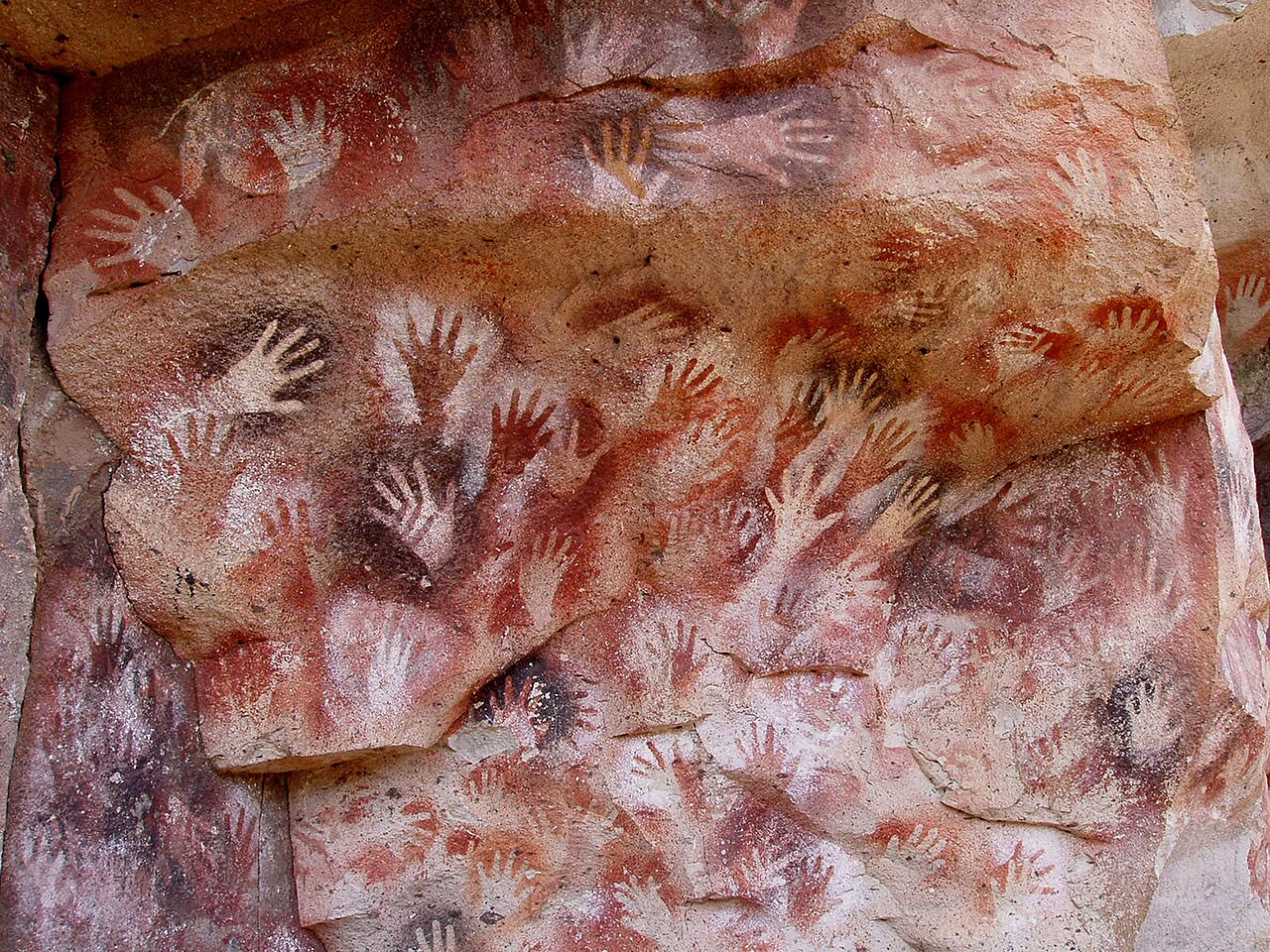
As the ice retreated, the painted world spread and changed. Niaux's black bison close the Magdalenian in Europe, while across the ocean the first South Americans blew ochre over their hands at Cueva de las Manos.
The World Then
The great thaw. Glaciers pull back, sea levels rise, and the painted world both blossoms and scatters — the last masterpieces of the European caves are made even as the first artists of the Americas blow ochre over their hands in Patagonia.
The Art
In Europe the Magdalenian tradition plays its final movement: the black bison of Niaux, the mammoth frieze of Rouffignac drawn deep underground by lamplight. In the Americas an entirely independent tradition begins — stencilled hands by the hundred, guanaco hunts, and at La Lindosa painted cliffs that may remember ice-age giants.
What They Depicted
Bison, horses and ibex still rule the European walls, joined by engraved reindeer as the herds shift north with the warmth. Across the ocean: hands, hands, hands — a whole cave of them at Cueva de las Manos, waving across thirteen millennia.
Seeing It Today
Niaux still admits small torch-lit groups — one of the last great painted caves you can enter in the original. Rouffignac runs an electric train past its mammoths, and Cueva de las Manos is reached by a spectacular Patagonian canyon trail.