The Early Holocene
7,000 – 11,700 yrs ago · 18 sites
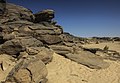
A warmer, greener world. The Sahara was a savanna whose people painted cattle, dancers and swimmers; from Arabia to the Horn of Africa, rock art turned from the beasts of the hunt to the herds people lived by.

The World Then
The ice is gone and the world is young, wet and green. The Sahara is a land of lakes where hippos wallow and herds graze; monsoons water Arabia; and from these generous centuries comes some of the most joyous rock art ever made.
The Art
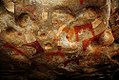
Painting flourishes on open shelter walls rather than deep caves: many-coloured herds at Tassili n'Ajjer, the strange floating 'swimmers' of Egypt's Cave of Swimmers, the honey gatherer of La Araña climbing the lianas in confident silhouette. Scenes become stories — hunts, dances, gatherings, daily life in motion.
What They Depicted
Cattle above all: the herds that replaced the wild game fill African and Arabian panels by the thousand. Human figures grow lively and social — archers, dancers, families — while at Peruaçu in Brazil, geometric lattices in red and yellow guard meanings we can no longer read.
Seeing It Today
Tassili n'Ajjer and the Gilf Kebir are true desert expeditions; Laas Geel, an hour from Hargeisa, is astonishingly accessible for art this fine. Valcamonica, engraved from this era down to Roman times, is an easy Alpine valley visit.