El Mirón Cave
Spain · Europe
This text was written with AI. How this is made →
An ochre-stained burial hidden behind an engraved limestone block
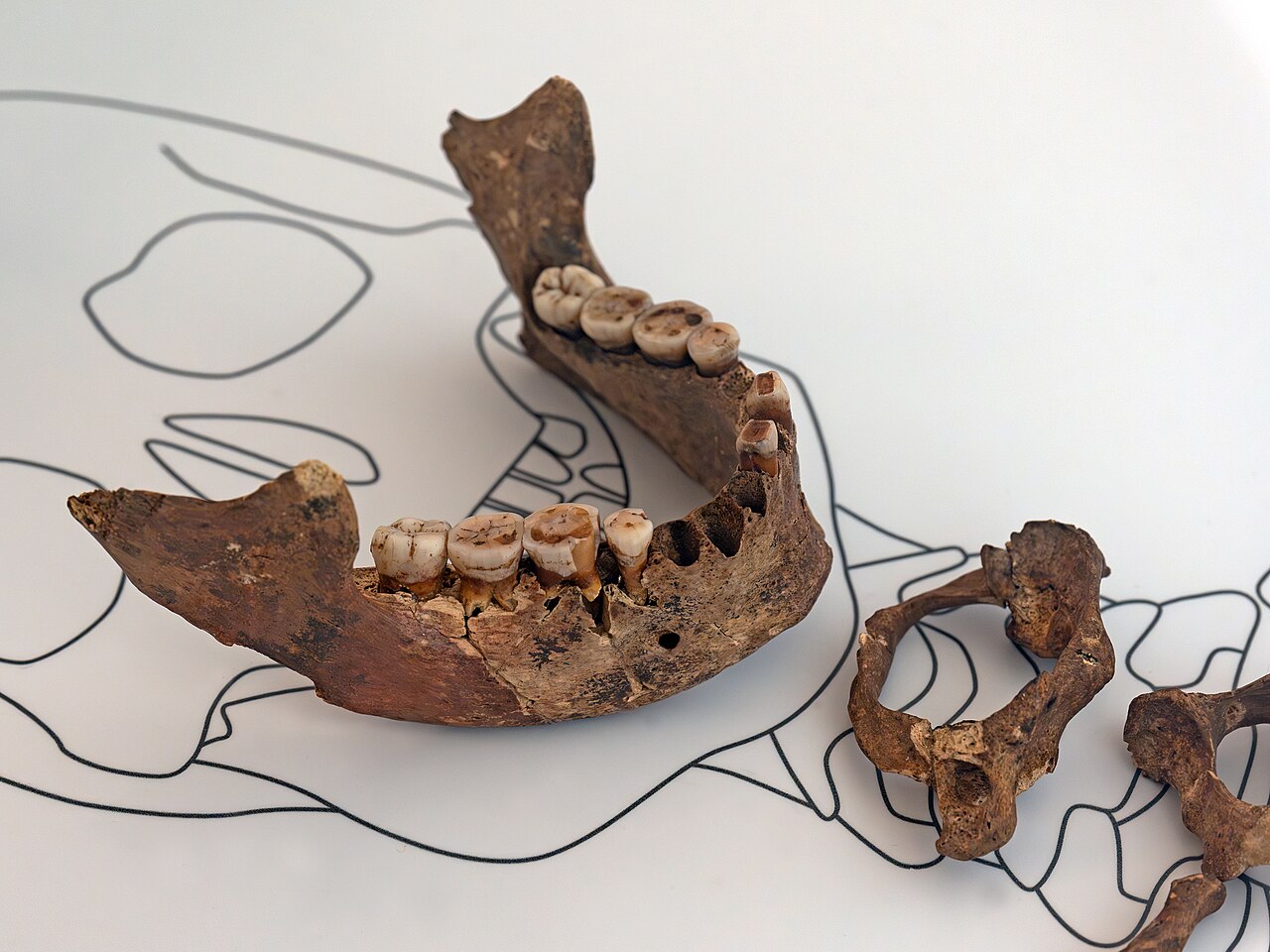
In the upper Asón valley of eastern Cantabria, El Mirón holds one of Iberia's longest occupation sequences, from the Mousterian to recent times, excavated systematically since 1996. Its defining find came in 2010: the 'Red Lady', a woman buried some 18,700 years ago, her ochre-stained bones set behind a large engraved limestone block. A horse engraving and a striation-engraved red deer scapula complete its Magdalenian record.
Age
~18,700 yrs
Period
Magdalenian
Setting
Cave
Art form
Petroglyphs
Discovered
1903
Status
Closed (Research Access Only)
Gallery
The art
Notable Features
- ◦ 'Red Lady' Magdalenian burial
- ◦ Engraved limestone block
- ◦ Striation-engraved deer scapula
Depicted Subjects
Hinds (Female Red Deer)Horses
How it was made
Fine-line engraving
How we know its age
Rock art carries no signature and no date. These are the methods that put an age on this site. How these methods work →
Plan a Visit
AccessClosed to the public.
Links
Hours & prices change — always confirm on the official site before travelling.
Sources
- 1.El Mirón Cave — Wikipedia
- 2.Extraordinary Early Magdalenian finds from El Mirón Cave, Cantabria (Spain) — Antiquity
- 3.The Magdalenian human burial of El Mirón Cave (Ramales de la Victoria, Cantabria, Spain): introduction, background, discovery and context — Journal of Archaeological Science
Further reading
- Cueva de El Mirón — Don's Maps
Where to go next
Same subject · Deer
Same era · The Last Glacial Maximum
Same art form · Petroglyphs
Photographs via Wikimedia Commons — image credits. Map data © OpenStreetMap contributors.