How this is made
Rupestre is made with AI, and this page says where. Some of it you would guess; some of it you would not, which is the point of writing it down. The European Union's transparency rules for AI-generated content took effect on 2 August 2026 and this page exists partly to meet them — but mostly because someone deciding how much to trust a date about Lascaux deserves to know how the sentence in front of them was written.
The text
Every site description, highlight, spectacle note and essay here was drafted by a language model working from the sources cited on that page. The sources come first: a site is added with its Wikipedia article, its UNESCO listing where it has one, and whatever official venue or ministry page exists, and the prose is written from those. Not copied from them, and not written from memory.
That prose has not been read line by line by a person. Parts of it have — individual sites have been checked by hand, corrected and rewritten, and an automated pass has compared every claim about how a site was made and how its age was established against that site's own citations. But a spot check is not an editorial review, and the atlas would rather label the pages than lean on the exemption the rules grant to AI text a named editor has actually reviewed.
So read it the way you would read any tertiary source. Every fact here has a citation sitting next to it. Open the citation.
The translations
The Romanian, French and Spanish versions are machine translations of the English. Where a translation and the English disagree, the English is the one that was written against the sources.
The images
The photographs are not AI. All of them are real photographs from Wikimedia Commons under free licences, each credited to the photographer who took it — beside the image, and again on the credits page. Files that Commons marks as machine-generated are rejected outright by both image pipelines rather than labelled and kept, because there is no way to vouch for what a synthetic photograph of a “cave” actually depicts.
The site's own artwork is AI. The 404 illustration, the hand-print mark that became the favicon and app icon, and the thirteen line drawings used as map markers were all generated with Google Gemini. Those drawings deserve a word: they stand in for photographs on 41 site pages, including every site whose imagery is withheld out of respect for the Indigenous communities who hold it. They are drawings of nothing in particular — a generic bison, a generic hand — never a depiction of the site you are reading about.
Each asset is recorded in the repository with what made it, where it is labelled, and where it is not, with the reason. Nothing is left to be inferred from silence.
What the machine drew
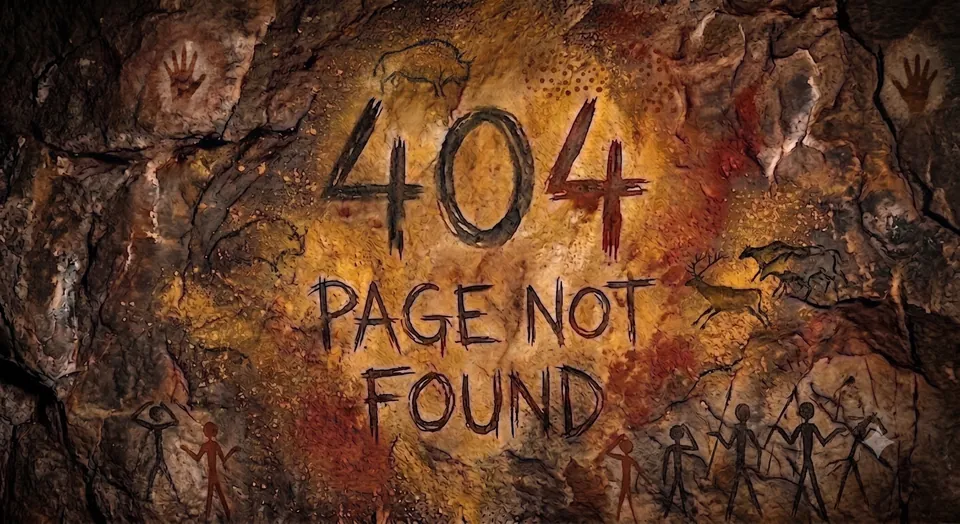
Judgment and checking
Nothing here is purely one or the other. The spectacle ratings were generated first, then written down as a rubric, audited against it and corrected — and several of the machine’s proposed corrections were rejected by hand, with the reasons recorded. What belongs in the atlas at all works the same way: candidates come from surveys and guides, and a person draws the line. That line is why this is an atlas of prehistoric art and not of rock art in general.
The checking is recorded in the repository rather than summarised here, because a record you can read beats a paragraph you have to believe. Every site’s facts have been compared against its own cited sources by an automated pass, fact by fact, with the sentence it relied on quoted beside each verdict. A human pass over that same record has begun, and is a good deal smaller. Where the two disagree the human verdict is the one that counts — and the distance between them is why these pages carry a label.
Corrections
If something here is wrong — a date, a photograph attributed to the wrong person, a site that should be here and isn't — say so and it gets fixed. That was the arrangement before any of this was machine-written and it is unchanged by it. The contact route is on the about page.