Cussac Cave
This text was written with AI. How this is made →
Monumental deep-cut engravings beside the oldest Gravettian burials known in France
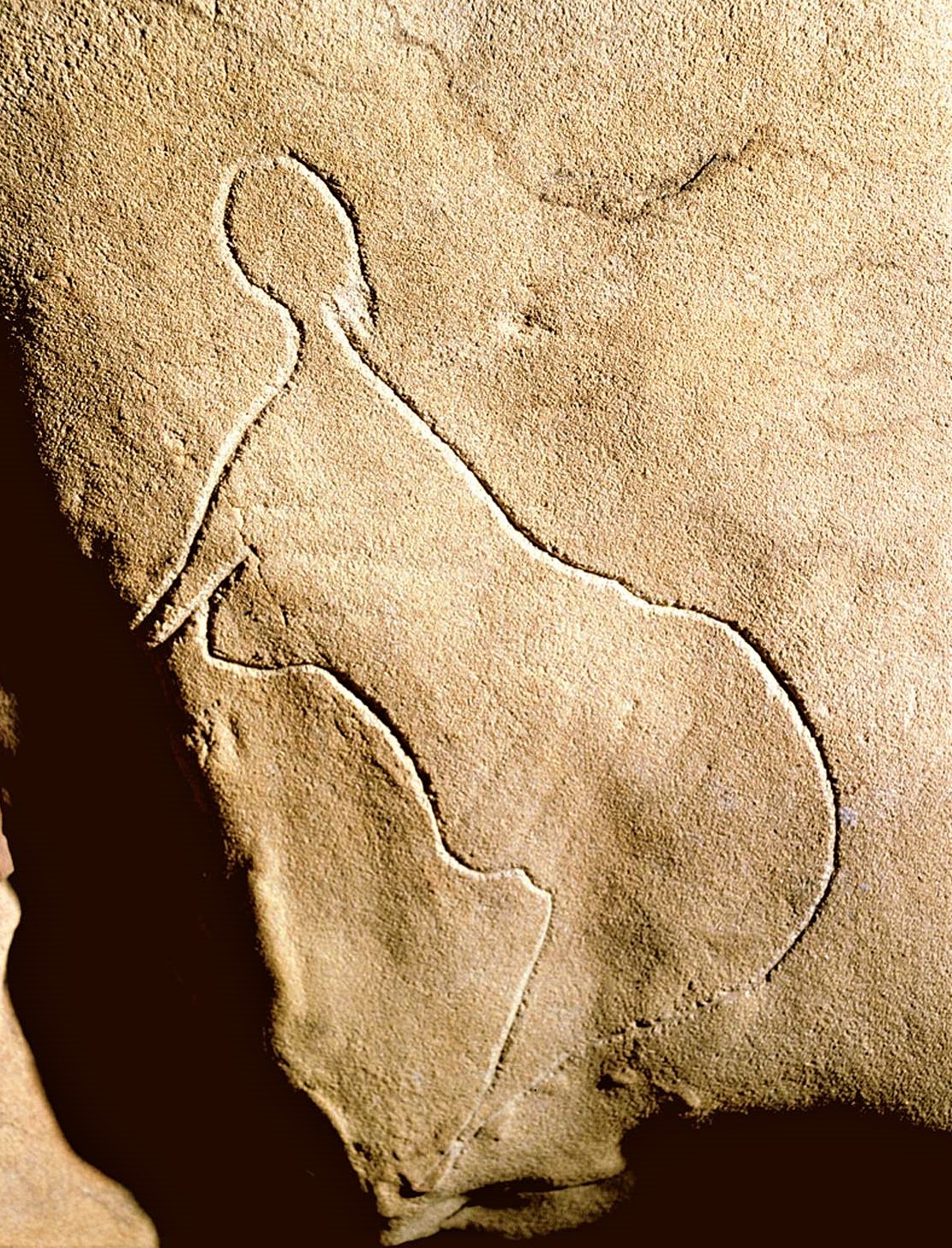
Discovered by speleologists in 2000, this 1.6 km cave in the Dordogne preserves over 150 Gravettian engravings cut unusually deep into its soft limestone walls — bison, mammoths, horses, aurochs and rare female profiles, with a Grand Panel bison 4 m long. In hollows first dug by hibernating bears, the remains of at least five people were deposited around 25,000 years ago, the most complete Gravettian human remains known from France. Never opened to visitors, the cave is studied under strict conservation rules.
Gallery
The art
- ◦ Grand Panel with a 4 m bison
- ◦ Burials in bear hollows
- ◦ Deep monumental engravings
How it was made
How we know its age
Rock art carries no signature and no date. These are the methods that put an age on this site. How these methods work →
Plan a Visit
Sources
- 1.Grotte de Cussac — Wikipedia
- 2.La grotte ornée de Cussac - Le Buisson-de-Cadouin (Dordogne) : premières observations — Bulletin de la Société préhistorique française
Further reading
- Cussac Cave — Don's Maps