Cueva Pintada de Gáldar
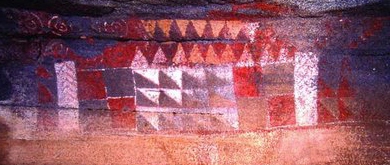
Red-and-white geometric friezes painted by the pre-Hispanic Canarii around the twelfth century, found by chance beneath the streets of Gáldar in 1862.
Beneath the modern town of Gáldar, once the seat of Gran Canaria's island kings, farmers cutting into a hillside in 1862 broke through the roof of a chamber whose walls blazed with painted decoration. The Canarii, Berber-descended islanders who lived here before the Spanish conquest, had carved the cave from volcanic tuff and dressed its interior in friezes of triangles, squares and concentric circles in red ochre and white clay, probably around the twelfth century. Some researchers read the panels as a lunar calendar. Excavations from 1987 uncovered a whole village of stone houses around it, all now sheltered under a striking museum reopened in 2006.
Gallery
Notable Features
- ◦ Friezes of triangles, squares and circles in red and white
- ◦ Man-made chamber at the heart of a buried Canarii village
- ◦ Panels interpreted by some as a lunar calendar